Advertisement · Paid content by KYNE skin
Skincare
I thought putting beef fat on my face was insane. Then I read the back of my moisturizer.
Six ingredients, one very skeptical tester, and the fatty-acid chart that changed my mind.

I have a drawer of half-used jars. Vitamin C that went brown before I finished it. A $78 cream whose second ingredient was denatured alcohol. Three separate barrier-repair serums, every one of which listed water first.
So when someone told me the thing that finally sorted out their skin was rendered beef fat, my honest first reaction was that they had lost the plot.
I was wrong, and it took me about four minutes of reading an ingredient list to find out why.
The moisturizer paradox
Here is the thing nobody selling skincare says out loud: most moisturizer is mostly water. Pick up any jar and look at the ingredient list. Aqua, water, or eau will be sitting at the top, usually by a very wide margin.
Water in a jar creates work. It needs an emulsifier to bind it to the oils, or the whole thing separates. It needs a preservative system, because water is where microbes live. It needs thickeners so it feels like a cream instead of a puddle. It needs pH adjusters to keep the preservative working.
None of that is sinister. It is just what happens once you decide the first ingredient is going to be water. But it is how a product ends up with thirty-four things in it when you only wanted one.
I counted thirty-four ingredients on the back of a cream I had been repurchasing for two years. I could identify six of them.
Your skin isn't broken. It's running low on the fats it already makes.
Your skin produces its own oil — sebum — and builds its outer layer out of lipids. The dominant fatty acids in that layer are oleic acid, palmitic acid, and stearic acid. Cold weather, age, over-cleansing, and retinoids all deplete them. When people say their skin feels tight and thin and reactive, this is usually the layer they are describing.
Tallow is rendered suet — the dense fat around the kidneys of grass-fed cattle. Its fatty-acid profile is dominated by those same three acids, in broadly similar proportions. Roughly half of it is oleic acid, the primary fatty acid in human sebum.
That is the whole premise, and it is not a marketing line. It is a chart you can look up.
Take the water out and the ingredient list collapses
KYNE skin is anhydrous. There is no water in it at all. It is a solid balm that softens on contact with your fingers, not a whipped emulsion.
Remove the water and most of the supporting cast becomes unnecessary. No emulsifier, because there is nothing to emulsify. No thickener, because it is already solid. No pH buffer. What is left is the part that was doing the work.
60-day money-back guarantee
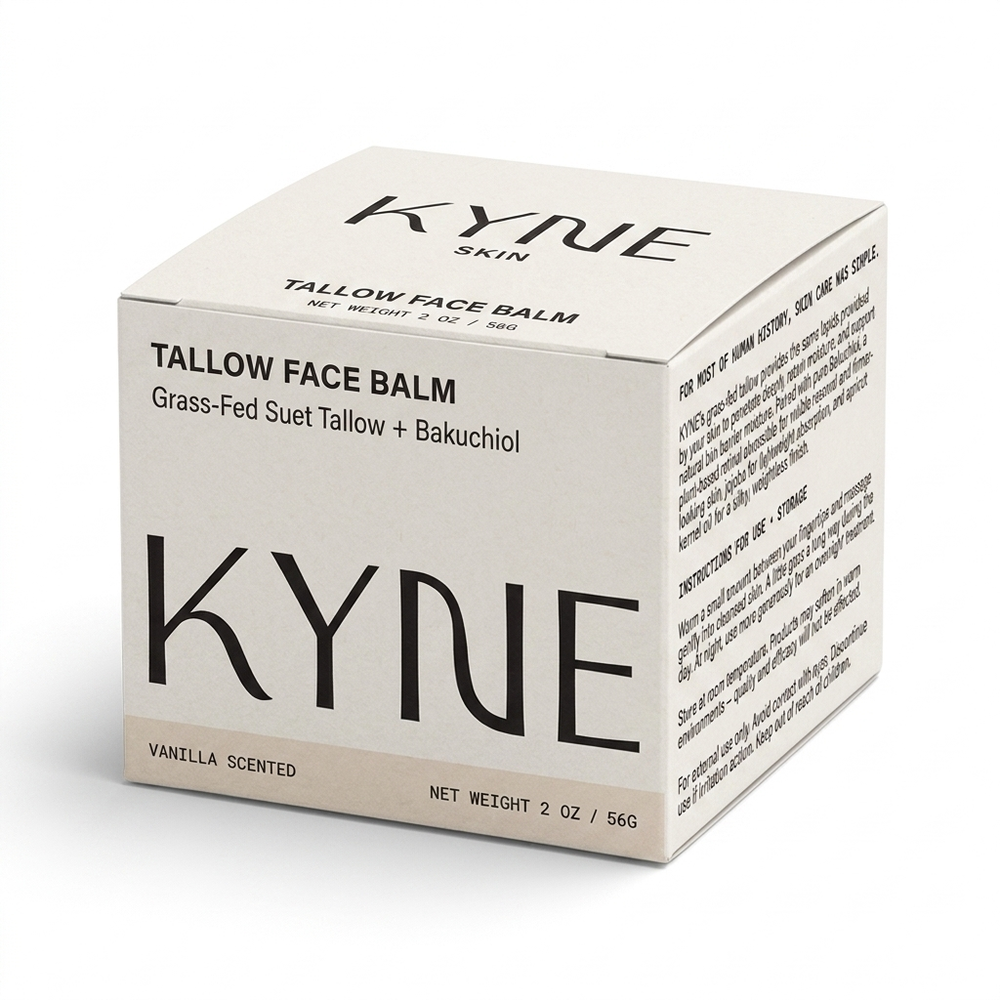
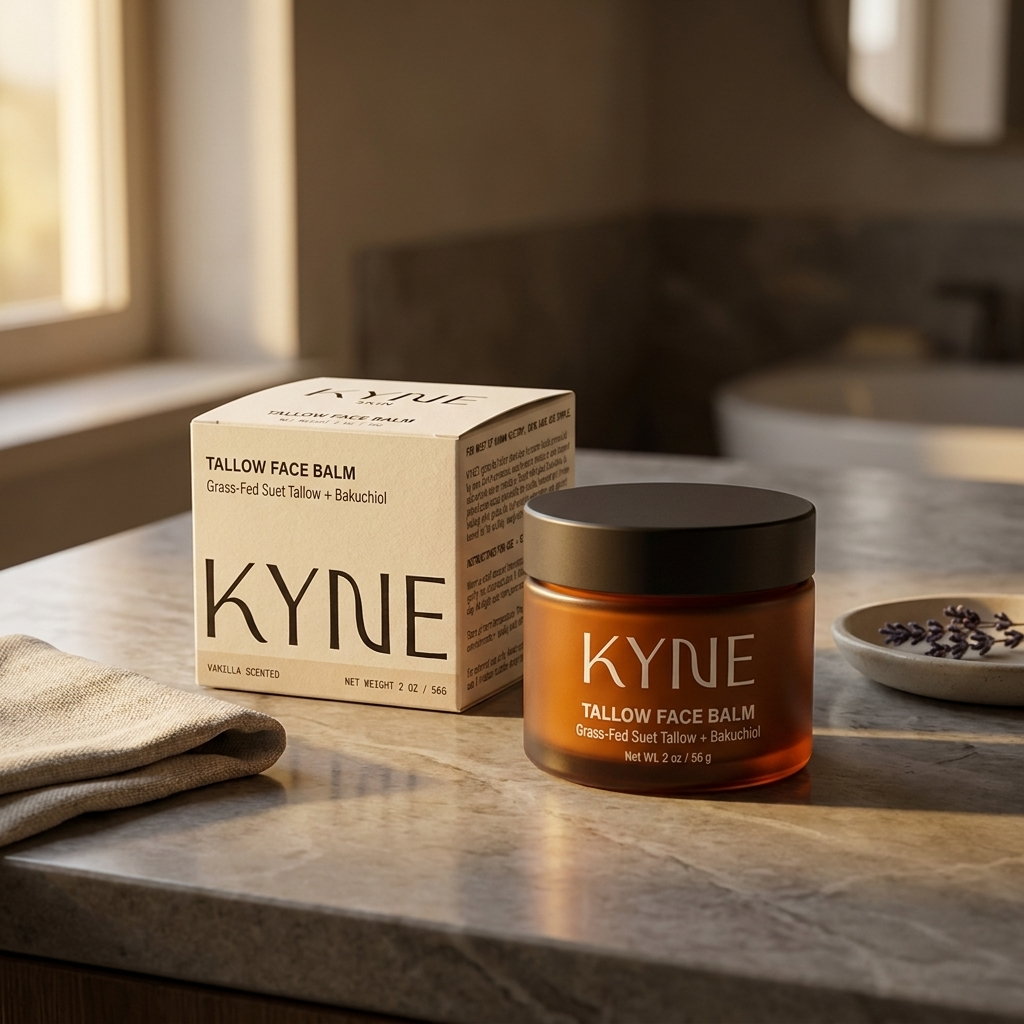
The balm in question
KYNE skin Tallow Face Balm
Solid, anhydrous, six ingredients. 2oz frosted amber glass jar with a metal spatula.
- Six ingredients, all of them readable
- Anhydrous — no water, no emulsifiers, no filler
- Single-source US grass-fed suet
- 2oz frosted amber glass jar
60-day money-back guarantee.
Six ingredients you can actually read
This is the full ingredient list. Not the highlights, not the actives — the entire deck.
- Tallow — rendered grass-fed suet, the structural base of the balm
- Jojoba seed oil — infused with vanilla, which is where the scent comes from
- Apricot kernel oil — light, fast-absorbing, keeps the balm from feeling heavy
- Bakuchiol — a plant-derived retinol alternative
- Tocopherol — vitamin E, an antioxidant for the oils
- Vanilla fruit extract — scent, not fragrance
That is six. There is no seventh thing further down the label in smaller type. The vanilla note you get when you open the jar is not added fragrance — it comes from the vanilla-infused jojoba, which was a formulation decision specifically so the ingredient list would not need a line that said parfum.
The two questions everyone asks first
Does it smell like beef?
No — and I want to be specific about why, because "no" on its own is what every brand says.
Beef smell in tallow comes from residual proteins and impurities left behind by sloppy rendering. Suet rendered properly and filtered is close to odorless. What you smell in the jar is the vanilla-infused jojoba, and it is subtle enough that it is gone off your skin within a few minutes.
I will say this though: if you go in expecting it to smell like nothing at all, you will notice something. It smells like warm vanilla and, faintly, like fat. Two weeks in, I stopped registering it.
Won't it clog my pores?
This is the better question, and the honest answer has a caveat in it.
Tallow's fatty-acid profile is close to what your skin already produces, and it is generally considered non-comedogenic. But "generally" is doing real work in that sentence. If your skin is oily or acne-prone, a heavy occlusive balm may not be the right call regardless of what is in it. Patch test along your jaw for a few days before you commit to your whole face.
KYNE skin is aimed at dry, mature, lipid-depleted skin. It is not the right product for everyone, and I would rather say that here than have you find out after you have bought it.
SIDE BY SIDE
What the alternatives actually contain
The one thing no other tallow brand has put in the jar
Here is where I stopped thinking of this as a novelty product.
Every tallow balm on the market stops at the tallow. Some add a carrier oil. A few add essential oils for scent. None of them, as far as I can find, have added bakuchiol.
Bakuchiol is a compound from the babchi plant that acts on some of the same skin receptors as retinol, without the peeling, the stinging, or the sun sensitivity that makes most people quit retinol in the first month. It is well established in serums. It has essentially never appeared in this category.
Putting it in an anhydrous tallow base is an unusual decision. It is also the reason this is a formulation rather than rendered fat in a jar.
What the first three months actually looked like
Week 1
Mostly getting used to the texture. You need far less than you think — a rice-grain amount, warmed between the fingers. My first few nights I used triple that and went to bed shiny.
Weeks 2–3
The tightness after washing stopped. This was the first thing I actually noticed rather than looked for.
Week 4
Stopped noticing the scent entirely. Also stopped reaching for the two other things I had been layering underneath.
Month 3
Second jar. A 2oz jar runs six to eight weeks at once a day, which works out to roughly a dollar a day — less than the cream I replaced, which I was going through faster.
Where the fat actually comes from
"Grass-fed beef tallow" on a label tells you almost nothing. It does not tell you which fat, from which animal, rendered how, or whether the batch you have is the same as the last one.
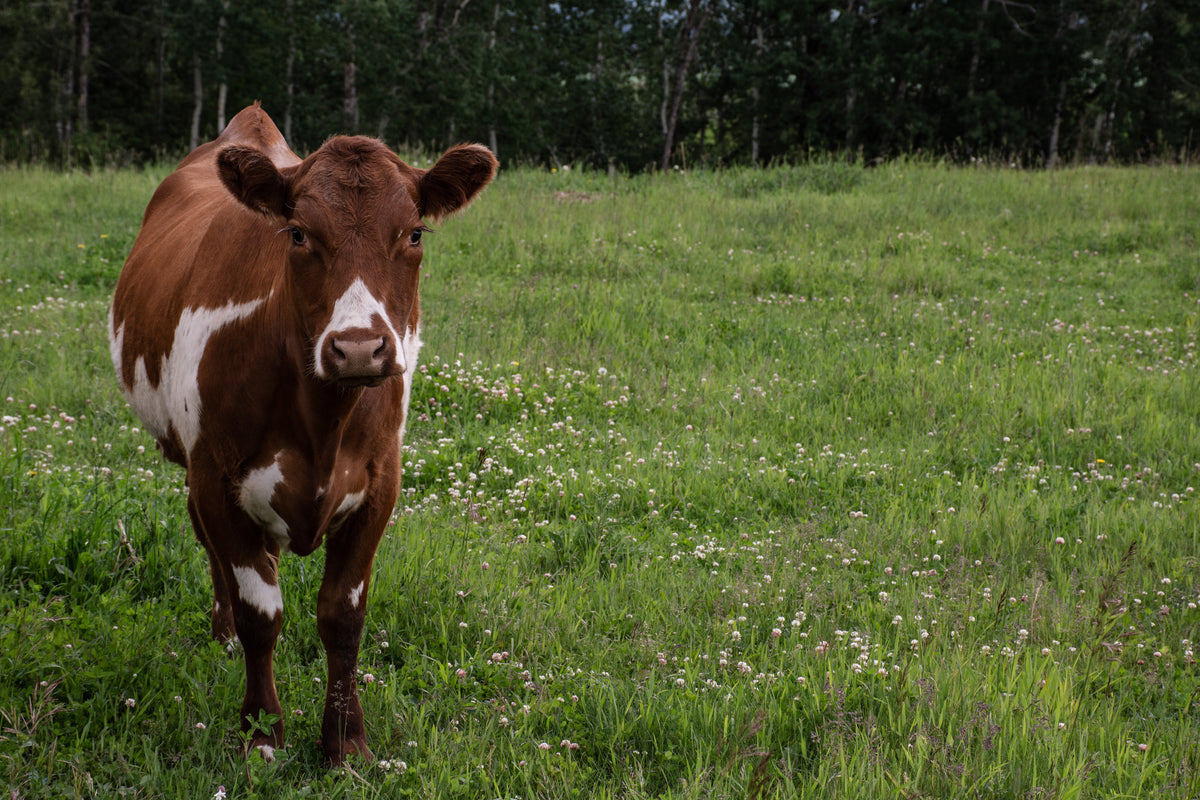
KYNE skin uses suet specifically — the perirenal fat, not trim — from a single US supplier. Suet is denser and more consistent than general trim fat, which means less variation between batches and less of the off-odor that gives tallow its reputation. Single-source means the same supplier every time, not whatever was available that month.
What other skeptics said
“The only thing my skin has ever needed. I was skeptical about tallow but two weeks in — completely converted.”

“Minimal ingredients, maximal results. My skin barrier hasn't felt this strong in years.”

“I smelled it first and almost returned it. Kept using it. Now I tell everyone.”

Remaining questions
A rice-grain amount, warmed between your fingertips until it softens, pressed into clean skin. Once a day is plenty for most people. If it feels heavy, you used too much.
It is anhydrous, which means no preservative system, no emulsifiers, and none of the common irritants that come with water-based formulas. The six-ingredient list is short enough to evaluate yourself. If you react to any of the six, avoid it.
Six to eight weeks with daily use. Because it is a solid balm you need far less per application than a liquid moisturizer.
Tallow is temperature-responsive — it softens in heat and firms up in cold. This does not affect the formula. Let it rest at room temperature, or refrigerate briefly, and the texture returns.
Sixty days, money back. Tallow does not suit every skin type and we would rather you find out at our expense than keep a jar you are not using.
If you got this far
KYNE skin Tallow Face Balm
Solid, anhydrous, six ingredients. Formulated to match the lipids your skin already makes.
- Tallow, jojoba, apricot kernel, bakuchiol, tocopherol, vanilla — that's the whole list
- Anhydrous — no water, no emulsifiers, no filler
- Single-source US grass-fed suet, not generic trim tallow
- 2oz frosted amber glass jar with metal spatula
60-day money-back guarantee. If it isn't right for your skin, send it back.
- Made in the USA
- 60-day guarantee
- Cruelty free
- Free shipping over $50